NHỮNG THÁP THỜ XÁ-LỢI ĐẦU TIÊN SAU KHI ĐỨC PHẬT NHẬP DIỆT
Theo Đại kinh Bát-biết-bàn (Trường bộ, DN 16), sau khi Đức Phật nhập
diệt, bộ tộc Mallā ở Kusinārā tổ chức lễ trà-tỳ (hỏa táng). Sau đó,
Bà-la-môn Doṇa đứng ra phân chia xá-lợi tro xương cho tám nhóm để
dựng tháp thờ:
- Vua Ajātasattu của xứ Magadha, kinh đô là Rājagaha,
- Những người Licchavī ở Vesāli,
- Những người Sākya ở Kapilavatthu,
- Những người Bulī ở Allakappa,
- Những người Koliya ở Rāmagāma,
- Bà-la-môn Vethadīpaka ở Vethadīpa,
- Những người Mallā ở Pāvā,
- Những người Mallā ở Kusinārā.
Bà-la-môn Doṇa nhận bình chứa dùng để đong chia xá-lợi để dựng tháp
thờ, và những người Moriyā ở Pipphalivana nhận than tro từ củi đốt
để dựng tháp thờ.
Tổng cộng có 10 tháp thờ xá-lợi, bình chứa và than tro. Kèm theo đây
là bản đồ của Bhikkhu Ānandajoti định vị các tháp thờ đó.
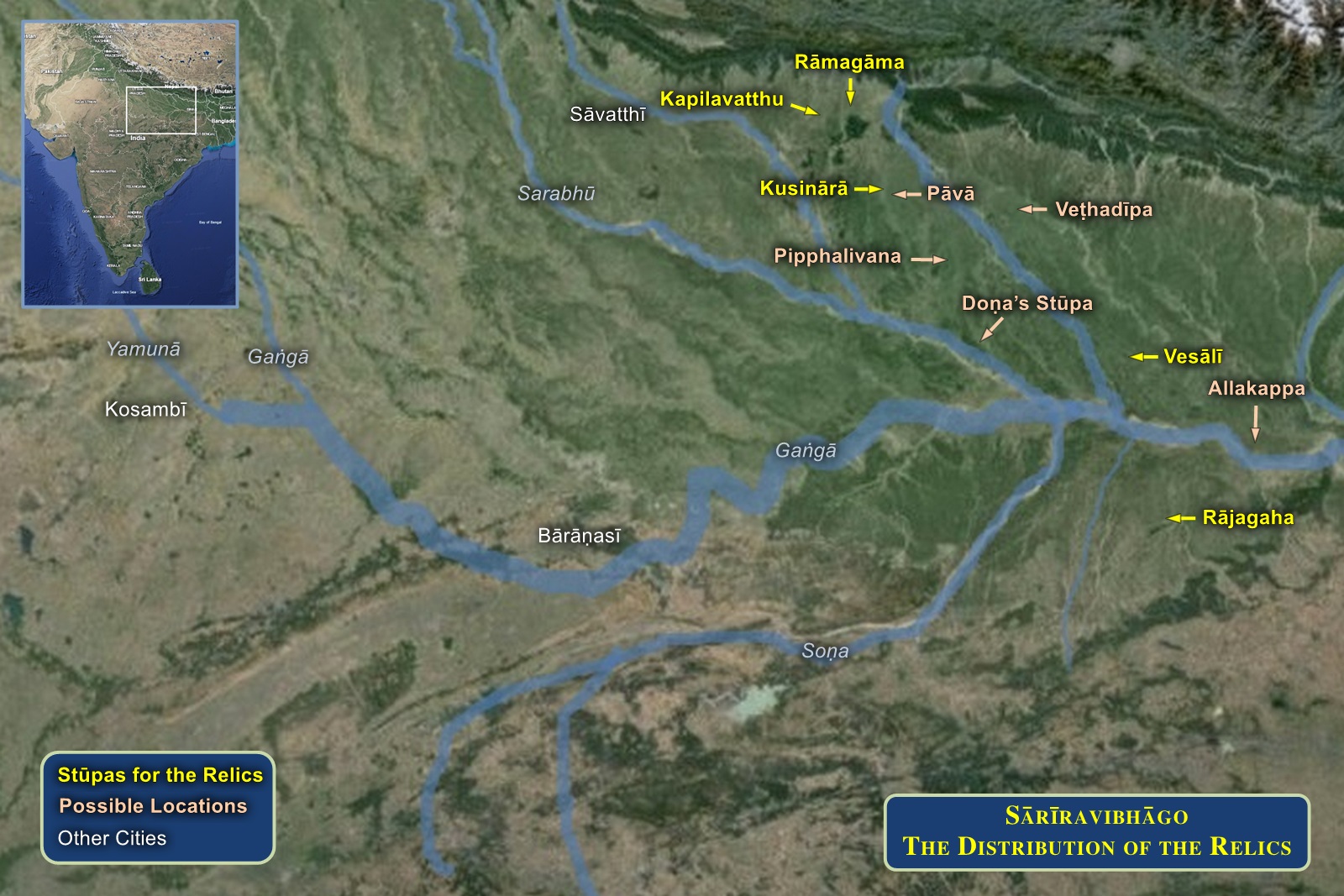
* Nguồn: Bhikkhu Ānandajoti (2024), Sarīravibhāgo - The Distribution
of the Relics.
Maps of Ancient Buddhist Asia
Sarīravibhāgo
The Distribution of the Relics
The map shown above is
approx. 550 km from East to West and 400 km from North to South
The exact positions of a number of the relic stūpas are not known. I
have based the possible locations on recent research, but more
excavations need to be done to confirm these sites.
One of the more interesting things this map brings out is that
Sāvatthī and Bārāṇasī did not get a share of the relics, and apart
from the relics that were taken to Rājagaha, all the others were
distributed fairly locally.
Some of the modern place names, where they differ, are given here:
Kapilavatthu = Kapilavastu; Pāvā = Fazilnagar; Kusinārā = Kushinagar;
Rāmagāma = Ramgram; Rājagaha = Rajgir; Vesālī = Vaishali; Rājagaha =
Rajgir.
from Mahāparinibbānasuttaṁ
-
Then the Magadhan King Ajātasattu, the son of Lady Wisdom, made
a Shrine for the Fortunate One’s bodily relics at Rājagaha and
held a festival.
-
The Licchavīs from Vesālī made a Shrine for the Fortunate One’s
bodily relics at Vesālī and held a festival.
-
The Sakyas from Kapilavatthu made a Shrine for the Fortunate
One’s bodily relics at Kapilavatthu and held a festival.
-
The Bulas of Allakappa made a Shrine for the Fortunate One’s
bodily relics at Allakappa and held a festival.
-
The Koliyas of Rāmagāma made a Shrine for the Fortunate One’s
bodily relics at Rāmagāma and held a festival.
-
The Veṭhadīpaka brahmin made a Shrine for the Fortunate One’s
bodily relics at Veṭhadīpa and held a festival.
-
The Mallas of Pāvā made a Shrine for the Fortunate One’s bodily
relics at Pāvā and held a festival.
-
The Mallas of Kusinārā made a Shrine for the Fortunate One’s
bodily relics at Kusinārā and held a festival.
-
Doṇa the brahmin made a Shrine for the urn and held a festival.
-
The Moriyās of Pipphalivana made a Shrine for the ashes at
Pipphalivana and held a festival.
-
Thus there were eight Shrines for the bodily relics, the Vessel
Shrine was the ninth, and the Ashes Shrine was the tenth, and so
it was former times.
Trang Sử
Liệu